
What Another Season Without Prep Really Costs
Skip storm prep one more season and you're not just rolling the dice on a jammed door. A garage door that fails under wind pressure can buckle inward, rip off its tracks, or blow completely off its hinges. Once that happens, you've got an open hole in the side of your house during the worst possible weather, soaked insulation, ruined stored belongings, and a repair bill that's a lot higher than a pre-season inspection would have been. Homeowners insurance doesn't always cover wind damage that resulted from obvious neglect, like a door that was already sagging or rattling loose for months before it failed.
Why the Garage Door Is Your Home's Weakest Wall
Every other exterior wall on your house is a solid, continuous structure. Your garage door is a large moving panel held in place by springs, tracks, rollers, and hinges, not poured concrete or load-bearing framing. That makes it the single biggest opening in your home's exterior, and the one most likely to fail first in high wind.
When wind hits a closed garage door, it creates pressure that pushes the door inward and, just as importantly, builds pressure inside the garage itself. If the door gives way, that sudden pressure change can stress the roof structure from the inside out, sometimes contributing to roof damage that has nothing to do with the garage itself. This is why building codes in many high-wind regions now require reinforced or wind-rated garage doors on new construction, even though older homes in our area were often built without that standard.
Standard Doors vs. Wind-Rated Doors
A standard residential garage door is built for everyday use, not sustained wind loads. Wind-rated doors use thicker steel, reinforced tracks, and heavier-duty end hinges designed to resist specific pressure ratings. Upgrading to a wind-rated door is a bigger investment (national replacement costs for garage doors commonly run anywhere from a few hundred dollars for a basic steel door to several thousand for an insulated, reinforced model), but for homes that have taken wind damage before, or that have an older door already showing wear, it's worth pricing out alongside a standard replacement.
Your Pre-Winter Wind and Storm Checklist
- Inspect the tracks: Look for bends, dents, or gaps between the rollers and the track. A door that's slightly off-track now will fail faster under wind load.
- Check every hinge and roller: Loose or worn rollers let the door rattle and flex, which weakens the whole system over time. Metal fatigue from constant movement in cold weather makes this worse.
- Tighten all hardware: Bolts and brackets loosen naturally with seasonal temperature swings. A quick pass with a wrench on all visible hardware takes a few minutes and catches a lot of problems.
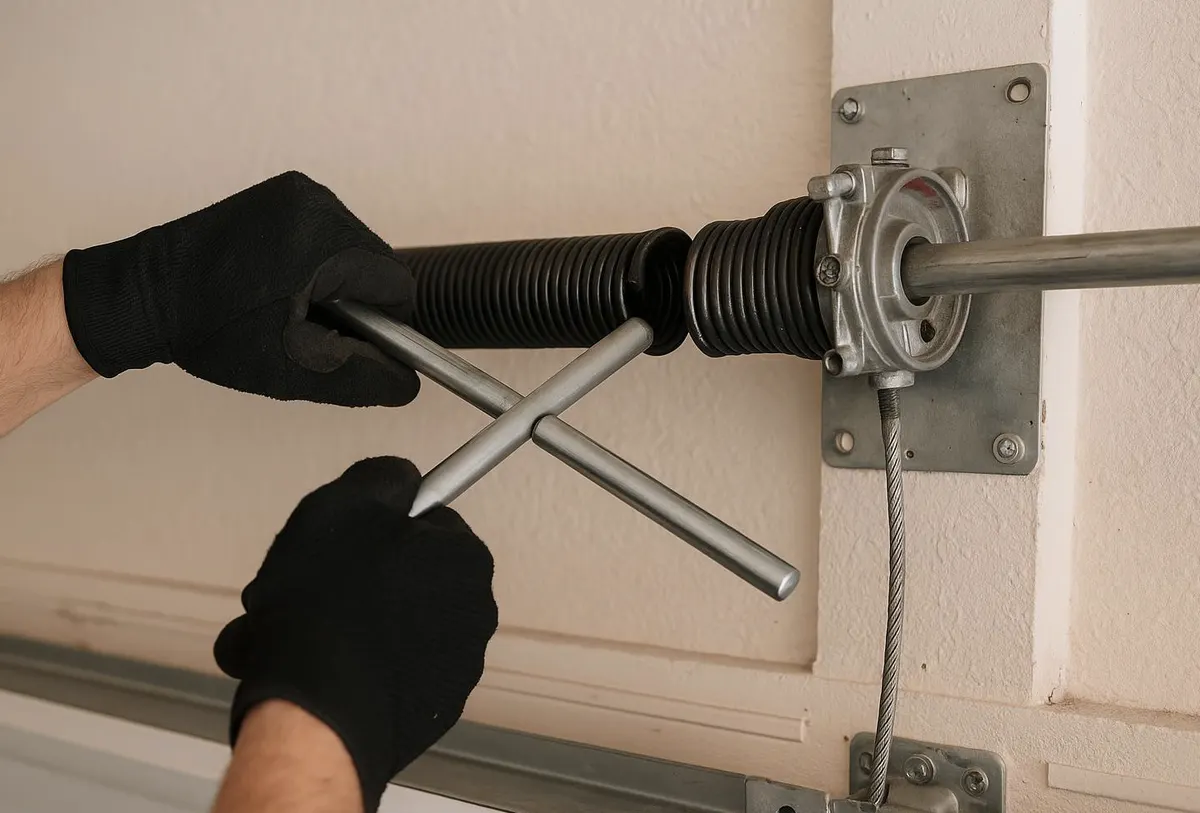
- Test the springs: Springs under tension are what keep the door balanced and controlled. A spring that's stretched, rusted, or already partially failed won't hold the door steady if wind starts pushing against it.
- Add or inspect horizontal struts: Reinforcing struts brace the door panels against wind pressure and are one of the more cost-effective upgrades for an older, unreinforced door.
- Replace worn weatherstripping: Beyond keeping out cold air, good weatherstripping on the bottom and sides reduces the gaps wind and wind-driven rain can exploit.
- Confirm your opener has backup power: Storms that bring high wind often knock out power too. A battery backup on your opener means you're not stuck manually wrestling a heavy door during a storm.
Signs Your Door Won't Hold Up to the Next Big Wind Event
- The door shudders, flexes, or bows visibly when it's windy, even with it closed
- You can see daylight gaps around the edges when the door is shut
- Panels are dented, cracked, or separating at the seams
- The door has come off track before, even briefly
- Springs are visibly rusted, stretched, or one has already broken
Any one of these is a sign the door is more vulnerable than it should be heading into a season of fall storms and the high wind events that often come with early winter systems off Lake Erie.
When to Call Willoughby Garage Door Experts
If your inspection turns up loose track, worn springs, or a door that just doesn't feel solid anymore, that's the time to bring in a professional rather than wait for a storm to make the decision for you. Our Garage Door Maintenance service covers a full hardware check, lubrication, balance testing, and spring inspection, catching the small issues before they become storm-day failures. If a spring has already failed or looks close to it, our Spring Repair & Replacement service gets that handled correctly and safely, since springs under tension aren't a DIY repair. And if a storm does catch you off guard, our Emergency Garage Door Service is there to get your door secured and functioning again fast.
If you're in Willoughby, Mentor, Eastlake, Wickliffe, Willoughby Hills, Kirtland, Painesville, or Chardon, give Willoughby Garage Door Experts a call before the next windstorm rolls through. A quick inspection now is a lot cheaper than an emergency repair later.